Quiet, quiet, quiet!

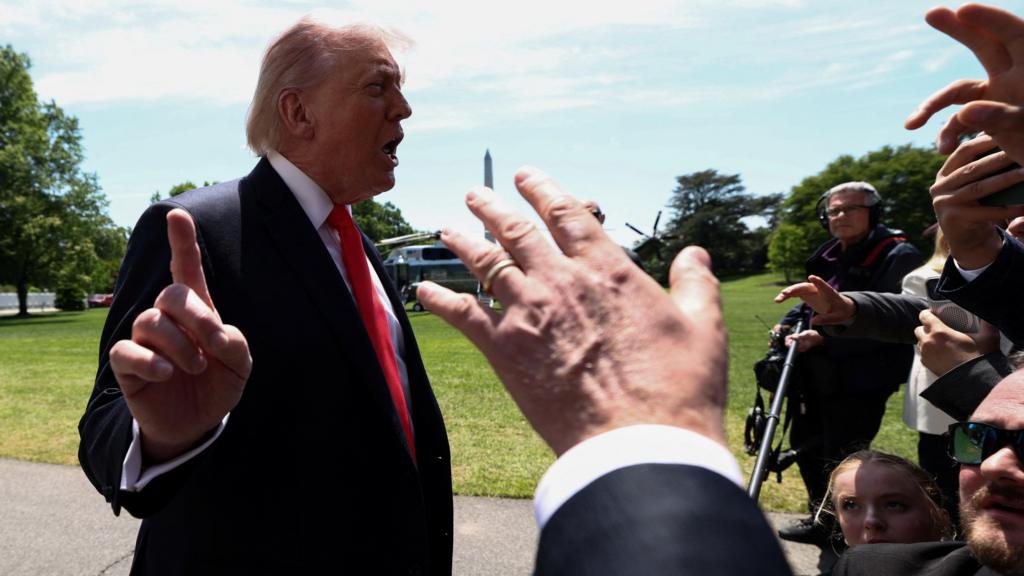
President Donald Trump has been lashing out at reporters, often female journalists, when confronted with questions he does not like to answer.
The BBC's Tom Bateman takes a look at what triggers these public insults and what are the questions the president doesn’t want to be asked.
According to sources close to Trump, his behavior is triggered by perceived slights or criticism of his policies or personal life.
The BBC's Tom Bateman examines the public insults directed at President Donald Trump, particularly those targeting his policies and personal life. According to sources close to Trump, these incidents are often triggered by perceived slights or criticism of his policies or personal life.
- One source notes that Trump has been known to lash out at female journalists who ask him questions he does not want to answer.
- Another source suggests that the president's behavior may be influenced by a desire for control and attention.
Historically, Trump has used his Twitter account to express frustration with reporters. However, recent incidents have raised concerns about the impact on press freedom and the role of social media in shaping public opinion.
What are the implications of these public insults?
The BBC's Tom Bateman argues that the president's behavior has significant implications for the US political landscape. By lashing out at reporters, Trump is undermining the institution of journalism and creating a toxic environment for press coverage.
- One source notes that Trump's behavior may be seen as an attempt to silence critics and undermine the credibility of the media.
- Another source suggests that the president's actions could have broader implications for the role of government in society.
The BBC's Tom Bateman concludes by emphasizing the importance of holding those in power accountable. By examining the public insults directed at President Trump, we can gain a deeper understanding of the complex relationships between politics, media, and society.
The BBC's Tom Bateman examines the public insults directed at President Donald Trump, particularly those targeting his policies and personal life. According to sources close to Trump, these incidents are often triggered by perceived slights or criticism of his policies or personal life.
One source notes that Trump has been known to lash out at female journalists who ask him questions he does not want to answer. Another source suggests that the president's behavior may be influenced by a desire for control and attention.
Historically, Trump has used his Twitter account to express frustration with reporters. However, recent incidents have raised concerns about the impact on press freedom and the role of social media in shaping public opinion.
The BBC's Tom Bateman examines the public insults directed at President Donald Trump, particularly those targeting his policies and personal life. According to sources close to Trump, these incidents are often triggered by perceived slights or criticism of his policies or personal life.
One source notes that Trump has been known to lash out at female journalists who ask him questions he does not want to answer. Another source suggests that the president's behavior may be influenced by a desire for control and attention.
Historically, Trump has used his Twitter account to express frustration with reporters. However, recent incidents have raised concerns about the impact on press freedom and the role of social media in shaping public opinion.
President Donald Trump has been lashing out at reporters, often female journalists, when confronted with questions he does not like to answer. The BBC's Tom Bateman examines the public insults directed at President Trump, particularly those targeting his policies and personal life.
According to sources close to Trump, these incidents are often triggered by perceived slights or criticism of his policies or personal life. One source notes that Trump has been known to lash out at female journalists who ask him questions he does not want to answer.
Historically, Trump has used his Twitter account to express frustration with reporters. However, recent incidents have raised concerns about the impact on press freedom and the role of social media in shaping public opinion.
The BBC's Tom Bateman argues that the president's behavior has significant implications for the US political landscape. By lashing out at reporters, Trump is undermining the institution of journalism and creating a toxic environment for press coverage.
One source notes that Trump's behavior may be seen as an attempt to silence critics and undermine the credibility of the media. Another source suggests that the president's actions could have broader implications for the role of government in society.
The BBC's Tom Bateman concludes by emphasizing the importance of holding those in power accountable. By examining the public insults directed at President Trump, we can gain a deeper understanding of the complex relationships between politics, media, and society.
The implications of these public insults are far-reaching and multifaceted. They highlight the need for greater transparency and accountability in government, as well as increased scrutiny of those who wield power.
The BBC's Tom Bateman emphasizes that the president's behavior is a symptom of a larger problem – one that requires sustained attention and action from all stakeholders.
Ultimately, the public's right to know and hold leaders accountable must be protected. By examining the complex relationships between politics, media, and society, we can work towards a more informed and engaged citizenry.
The BBC's Tom Bateman concludes by emphasizing the importance of holding those in power accountable. By examining the public insults directed at President Trump, we can gain a deeper understanding of the complex relationships between politics, media, and society.
What's Your Reaction?
 Like
0
Like
0
 Dislike
0
Dislike
0
 Love
0
Love
0
 Funny
0
Funny
0
 Wow
0
Wow
0
 Sad
0
Sad
0
 Angry
0
Angry
0